Patriots for People with Disabilities!
2025. 07. 16.
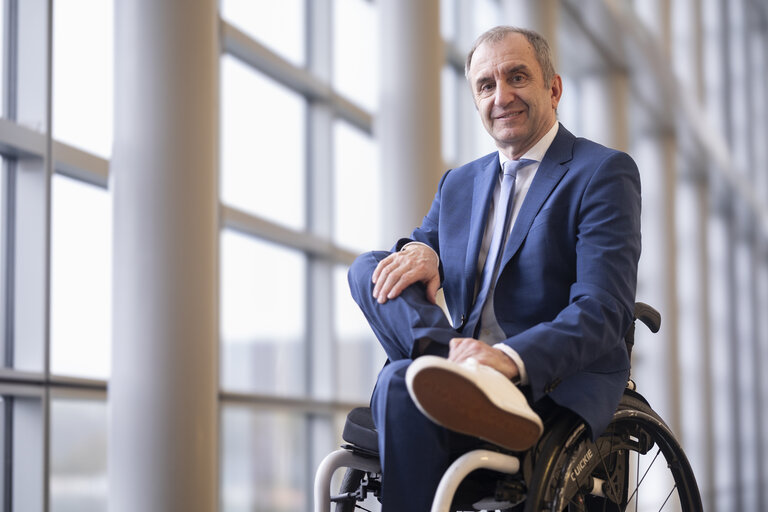
Today, the European Parliament’s Committee on Petitions voted on the EU strategy for the rights of persons with disabilities for the post-2024 period. Pál Szekeres, MEP for Fidesz, called it a major success that the committee—thanks to broad right-wing cooperation—adopted the inclusion of disability-focused approaches in future artificial intelligence initiatives. Szekeres emphasized: “This text reflects three decades of professional experience, and I am proud to have authored it as rapporteur.”
The MEP reminded: “The Committee on Petitions plays a special protective role within the EU. Petitions concerning disability issues serve as important sources of information for identifying shortcomings in the implementation of EU law and the UN Convention on the Rights of Persons with Disabilities (UNCRPD), both at national and EU levels.”
“Many petitions have highlighted that people with disabilities face widespread discrimination, especially in access to education and employment. Therefore, one of our key goals is to ensure that the early development, inclusive education, and accessibility for children with disabilities begin as early as possible in every Member State,” the MEP stressed.
Szekeres added: “In line with the principles of universal design, all EU Member States must improve accessibility in every aspect of life—such as the built environment, transportation, digital services, and communication tools.” He noted: “Although the accessibility standard was only adopted in 2021, it is encouraging to see that Hungary is already making great strides in implementing it!” The MEP also emphasized: “The revolution of artificial intelligence offers new opportunities to advance accessibility. That’s why it is crucial to incorporate disability-centered approaches into AI systems, including speech recognition and speech-generation tools that support communication for people with speech and hearing impairments.”
“Nothing about us, without us!” Szekeres concluded.